Independent reference · nothing for sale
Automated trading, explained without the pitch
A rule set that places orders without you clicking is an ordinary piece of software. Everything difficult about it happens after that: the fees, the fills, the drawdown and the gap between a curve drawn on history and an account balance in the present. This site explains that gap, and the sales funnel built on top of it.
What is here
Five things that decide whether an automated system survives contact with a real market
The mechanics
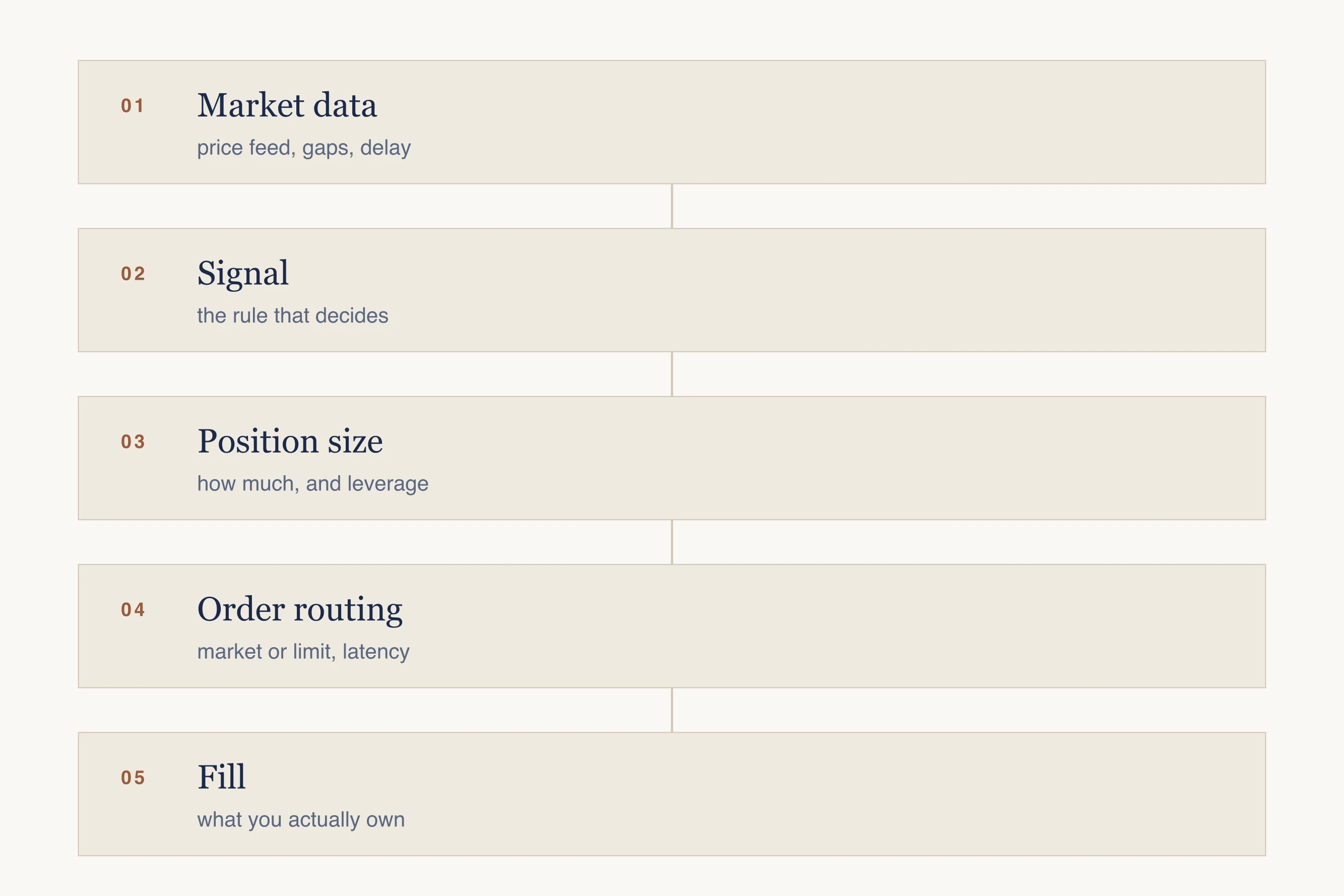
Data feed, signal, sizing, routing, fill. Five stages, each with its own way of failing quietly.
The backtest problem
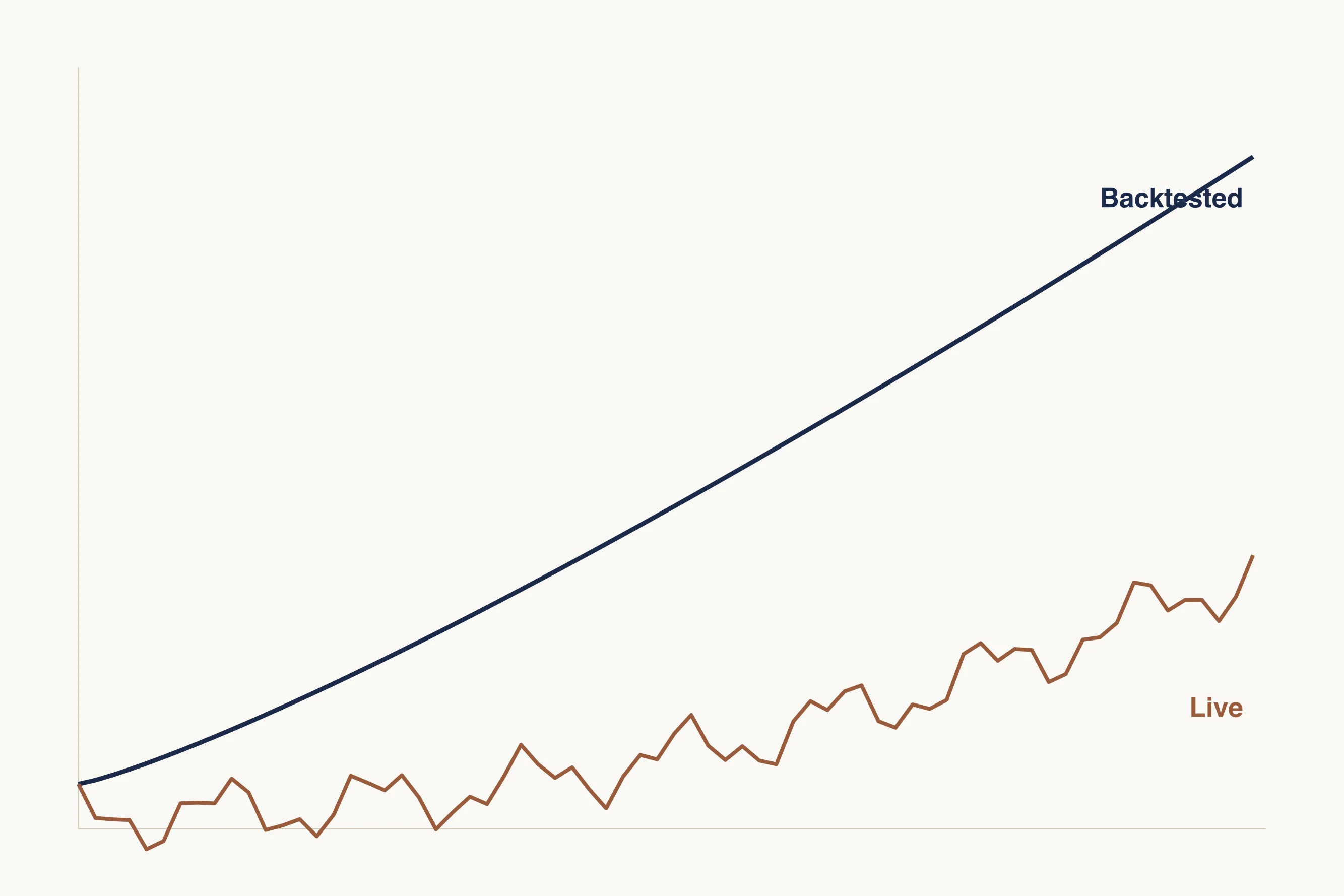
Why a curve that looks perfect on history is the expected result of searching enough parameters, not evidence of an edge.
The frictions
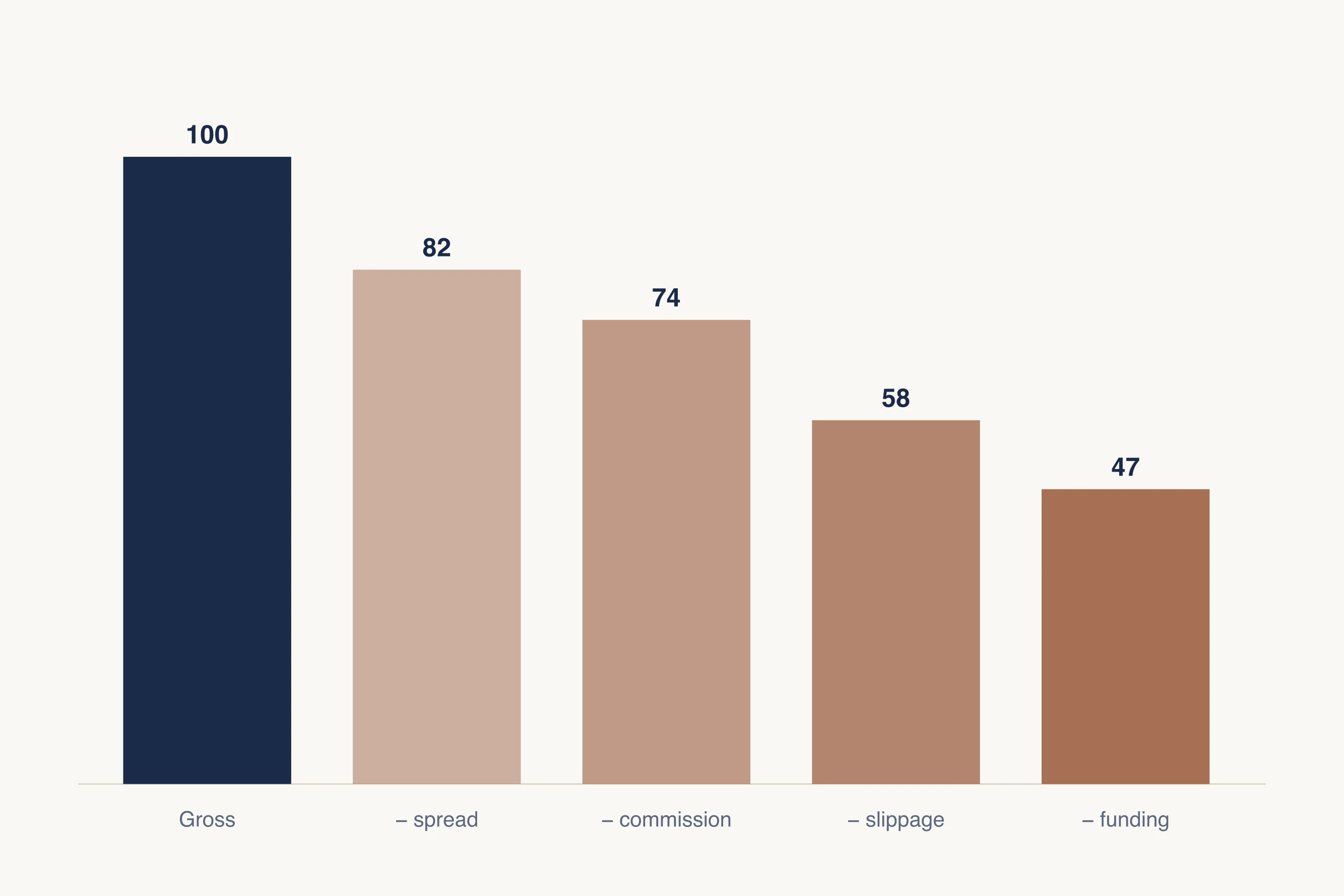
Spread, commission, slippage and funding. The costs are not a rounding error; on short horizons they are the whole result.
The arithmetic of loss
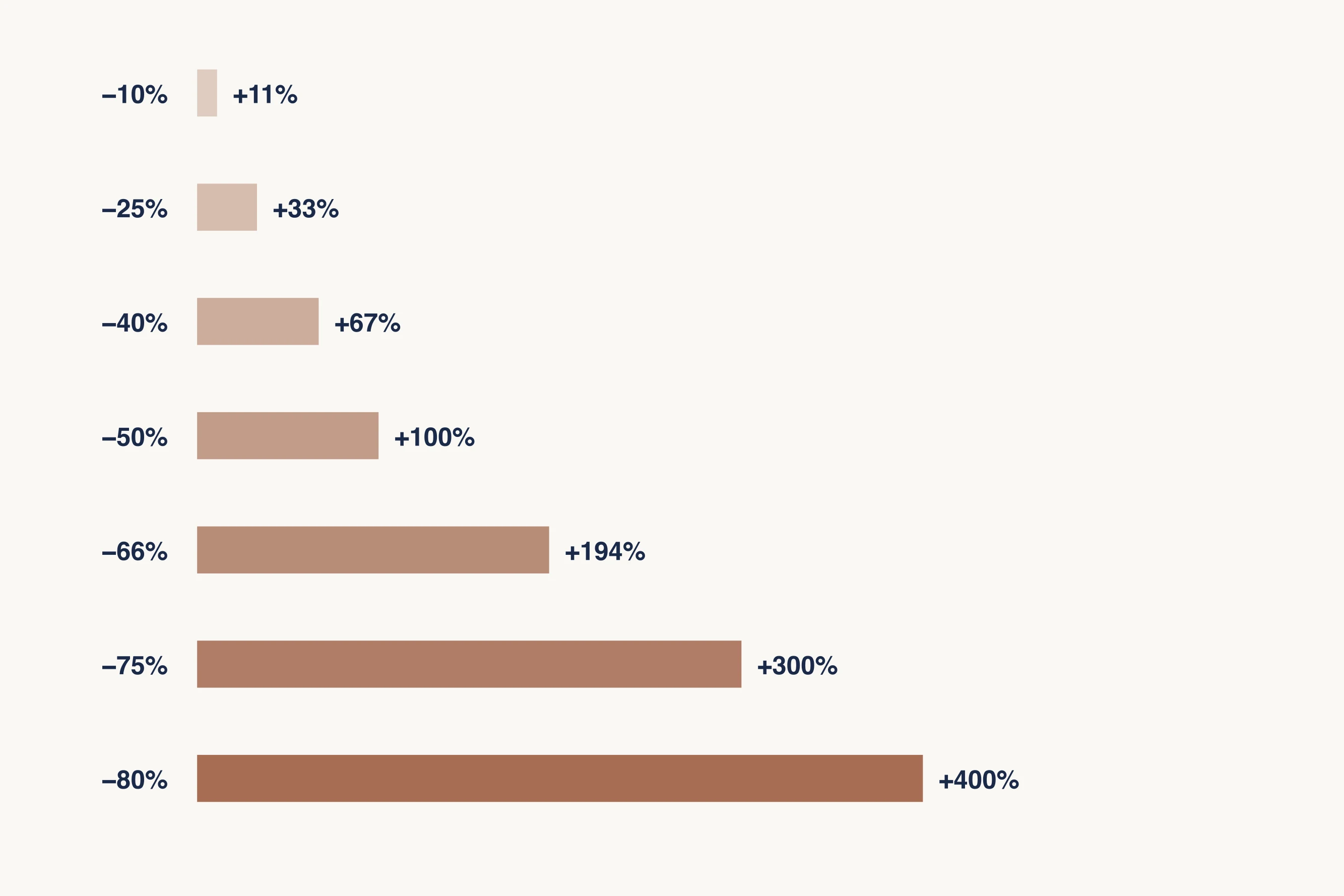
A 50% drawdown needs a 100% gain to get back to level. Leverage shortens the distance to zero faster than it lengthens the distance to profit.
The funnel
Winner tickers, deposit bonuses on a countdown, invented testimonials. The parts repeat because they work, not because they are true.
The vocabulary
One glossary, used consistently, so no page has to stop and redefine a term someone is counting on you not knowing.
The plain version
A trading bot is a rule set with an API key
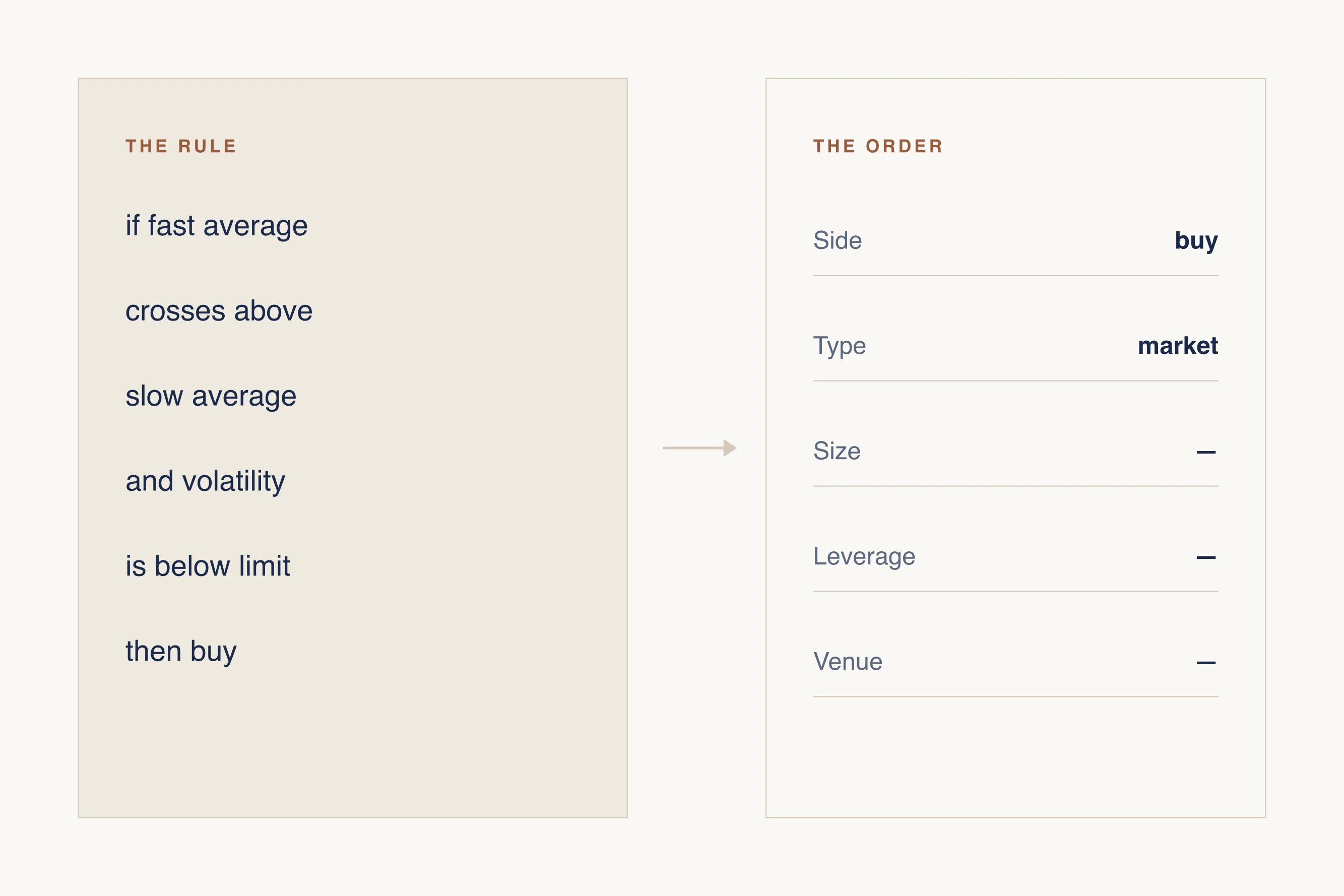
There is no category of software that knows where a market is going. An automated system takes a rule a person wrote, applies it to incoming prices without getting tired or scared, and sends orders to an exchange. Speed and discipline are real advantages. Neither is a forecast.
- It removes hesitation, not uncertainty Automation fixes the problem of a human failing to follow their own plan. It does nothing about whether the plan was any good.
- It inherits every assumption in the rule If the rule was fitted to a period when volatility was low, the bot will keep applying it when volatility is not.
- It runs the losing trades too The same discipline that takes every winning signal takes every losing one, at full size, at three in the morning.
Two descriptions of the same product
What the pitch says, and what the mechanism actually does
| The claim | What is being described | What the mechanism does |
|---|---|---|
| "State-of-the-art algorithm" | A rule set, sometimes a few lines long | Applies a fixed rule to new prices |
| "Wins in bull and bear markets" | A claim no strategy can make in advance | Performs differently in each regime, usually worse in the one it was not fitted to |
| "Verified 90% win rate" | Win rate without average win and loss size | Says nothing about profit: many small wins can be erased by one large loss |
| "Deposit $250 to activate" | A minimum deposit, framed as access | Moves money to a third party, usually before anything is demonstrated |
| "Members made $450 today" | Unverifiable figures with first names | A ticker rendered by the page, generated on load |
| "Risk-free trial" | A phrase regulators restrict for good reason | Trading with committed funds is not risk-free in any configuration |
How the pitch is built
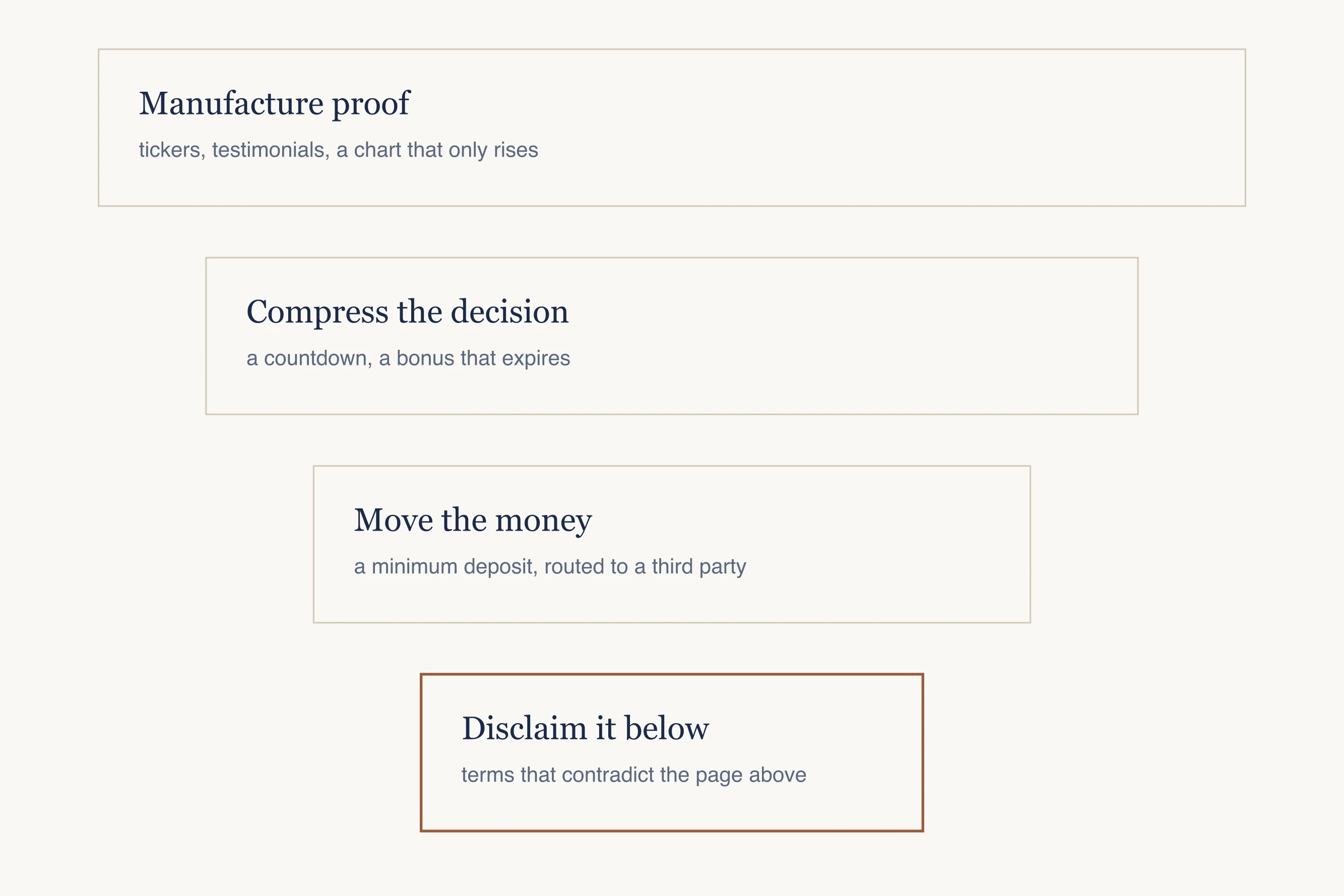
The funnel is four steps, and it is the same four every time
This is not a description of one site. It is the recurring shape of the automated-profit funnel, including the one that ran on this domain until 2025.
Manufacture proof
A ticker of named winners with amounts, testimonials with profit figures, and a chart that only goes up. None of it is verifiable, and none of it needs to be: it only has to be present while the reader decides.
Compress the decision
A countdown, a bonus that expires, a limited number of places. The purpose is to remove the interval in which someone would check a claim.
Move the money
The deposit goes to a third-party broker the page introduces. The referrer is usually paid at that moment, on the deposit itself, regardless of what happens next.
Disclaim it in the footer
The terms then state that the figures are illustrative, that no result is promised, and that the operator is a marketing site rather than a broker. The disclaimer contradicts the page above it and is the most honest thing on the site.
The reference
Start anywhere
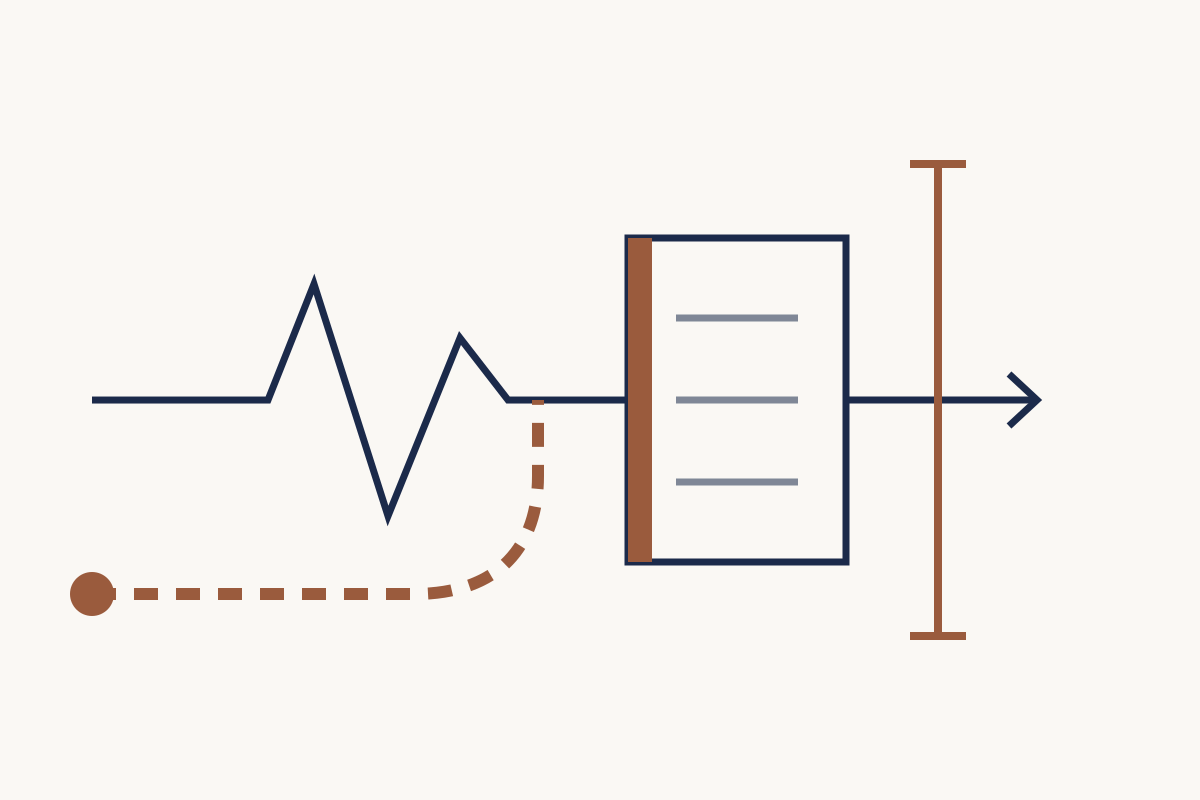 ExecutionLatency, and why speed is a barrier to entry
 Start hereWhat automated trading actually is
- MechanicsHow a trading bot works, stage by stage
- EvidenceWhy a perfect backtest is the least surprising thing in trading
 CostsThe costs that decide whether a system survives
 RiskDrawdown, leverage and the arithmetic of ruin
 The pitchAnatomy of the automated-profit funnel
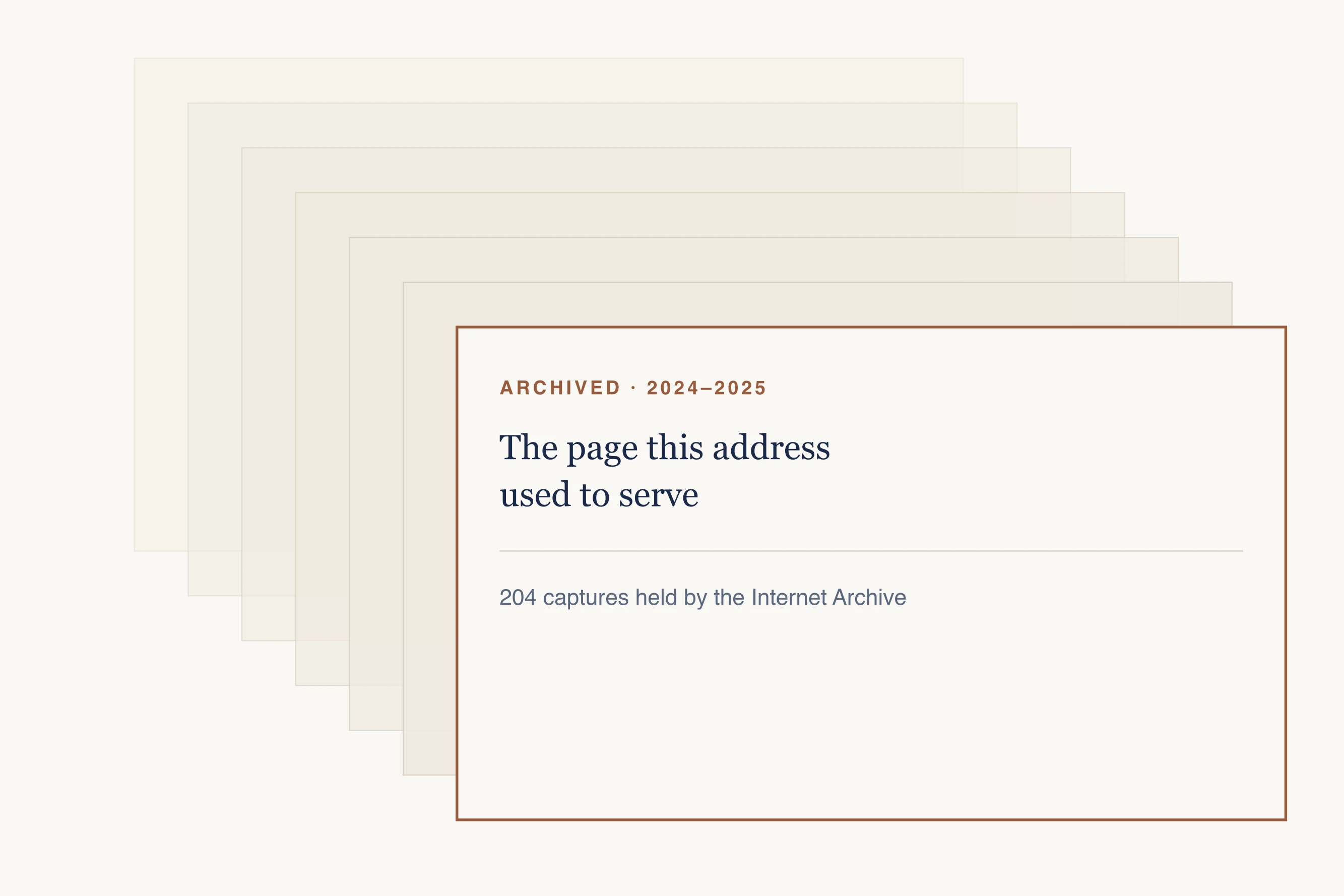 This domainWhat this domain used to host
If you only read one page, read the risk notice
This site has nothing to sell and no account to open. It exists because the domain it sits on spent two years telling people the opposite, and because the arithmetic in these pages does not change regardless of who is presenting it.